~70%
Design and code concentrate much of the risk
Many security defects originate early, when flows, permissions, data, architecture, dependencies and implementation patterns are defined.
We integrate security into the software lifecycle to reduce risk from requirements, design and code through deployment, operations and response.
Secure Software Development Lifecycle
Most security defects do not start in production: they are introduced during requirements, design, architecture, coding, integration and configuration. Fixing them late is usually more costly, slower and riskier for the business.
DrawCoders helps shift security left across the lifecycle, integrating it continuously into each development stage without turning it into unnecessary friction for teams.
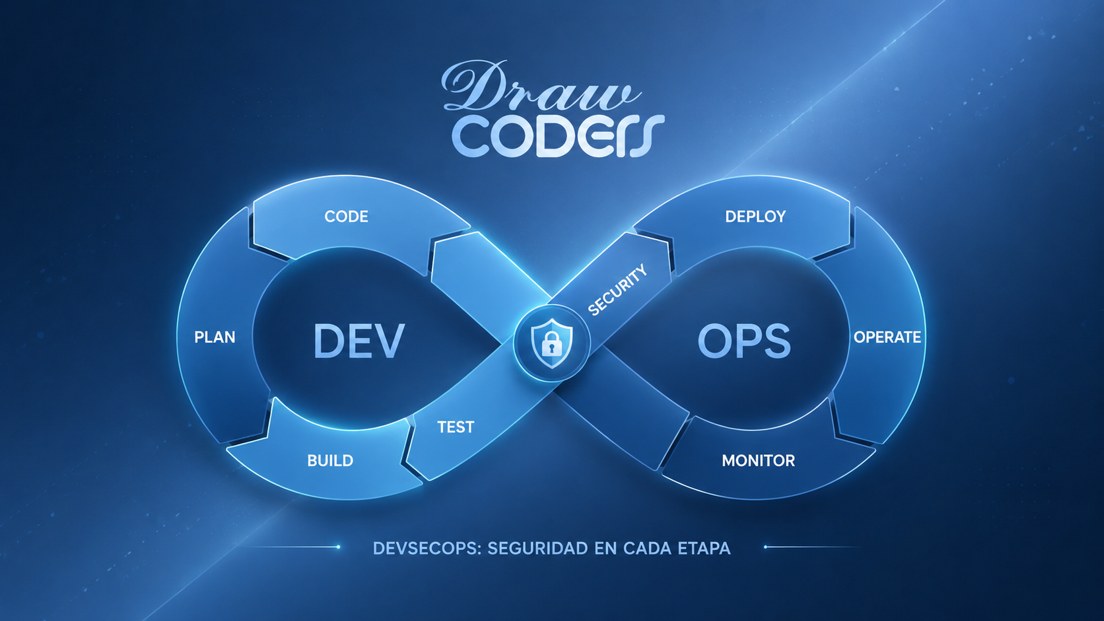
Shift-left security
Requirements, design, code, testing, deployment and operations with security controls integrated from the beginning.
~70%
Many security defects originate early, when flows, permissions, data, architecture, dependencies and implementation patterns are defined.
100x
A failure detected in production can require urgent changes, rework, deployment windows, investigation, communication and operational mitigations.
Shift-left
Security is integrated into each lifecycle stage; it is not inspected only at the end when the main decisions have already been made.
Work model
A secure SDLC must cover culture, design, coding, verification and operations. If one of these pieces is missing, security depends too much on manual efforts or late reviews.
Policies, training, roles, responsibilities, risk management, acceptance criteria and decision-making with security built in.
Security requirements, threat modeling, architecture review, privacy, abuse of flows and controls before building.
Secure coding, code review, SAST analysis, dependency management, SCA, SBOM, secrets and implementation standards.
DAST, IAST when appropriate, security testing, pentesting, security QA, control validation and technical evidence.
Hardening, monitoring, logging, incident response, vulnerability management, operational learning and continuous improvement.
Standards and regulations
We use complementary frameworks to design a practical program. Some help measure maturity, others define concrete practices, and others provide regulatory coverage for application security.
OWASP SAMM
Maturity model to measure and improve software security across business functions.
NIST SSDF
Secure development practices, based on SP 800-218, to integrate security into the SDLC.
Microsoft SDL
Proven Security Development Lifecycle practices, threat modeling and continuous verification.
DevSecOps
Control automation in CI/CD pipelines, shared culture and security as code.
ISO/IEC 27034
Organizational framework for application security and application security controls.
OWASP ASVS / Top 10
Practical references for verifiable requirements, technical controls and common application risks.
SAMM and NIST SSDF govern the what and maturity; SDL and DevSecOps provide the operational how; ISO/IEC 27034 provides regulatory coverage for application security.
Essential criterion
A process that does not include code analysis, architecture review and validation of technical decisions cannot be considered a serious secure development process.
Pentesting is a valuable verification practice, but by itself it arrives late: it finds symptoms when many design decisions, dependencies, permissions, data flows, integrations and deployments have already been built. Secure development works before, during and after those decisions.
A secure SDLC defines how software is designed, coded, reviewed, tested, released and operated with integrated controls. That requires looking at source code, architecture, repositories, pipelines, dependencies, secrets, environments, roles, traceability and the real way the team delivers changes.
Code
Insecure patterns, validations, errors, secrets, dependencies, permissions and technical debt that opens risk.
Architecture
Trust boundaries, exposure, sensitive data, integration, identity, sessions, threats and controls.
Process
Definition of Done, reviews, tests, gates, exceptions, evidence, releases and continuous improvement.
Contact us
Fill in your details and we will schedule an initial conversation to understand your technical challenge.